


AI & TECHNOCOLOGY
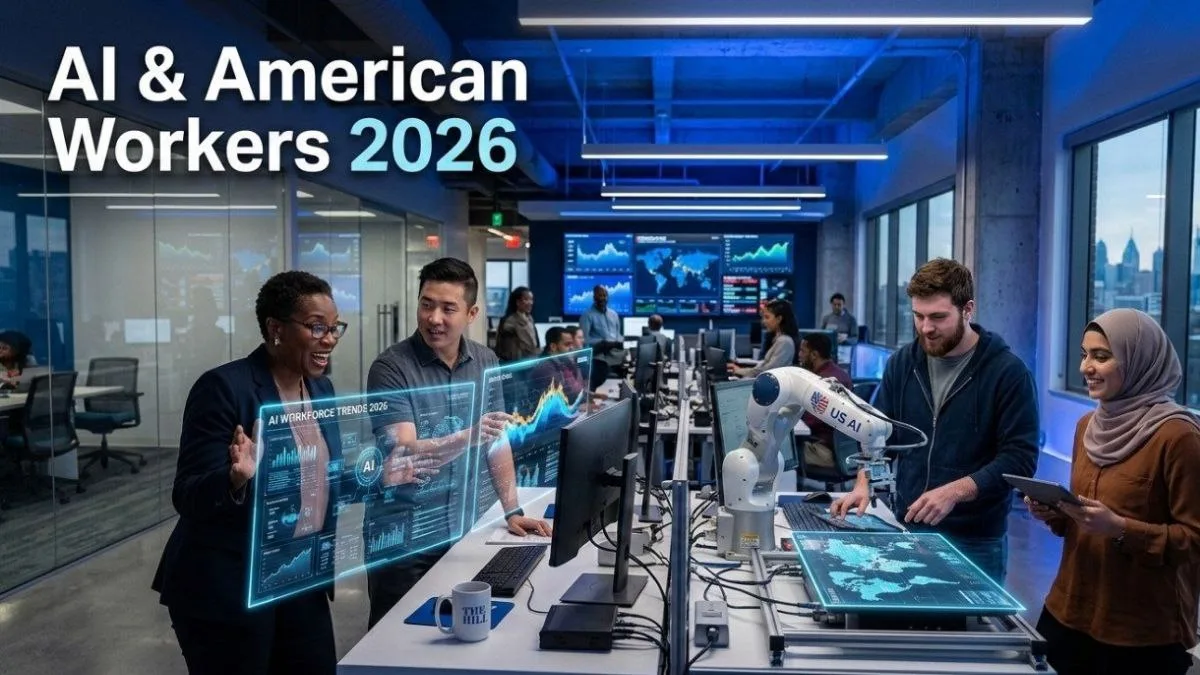
How AI Is Transforming the American Workplace in 2026: Jobs, Industries, and Daily Life
From factory floors to corporate offices, artificial intelligence is no longer a future threat — it is today’s reality reshaping how Americans live and work.
Introduction
WASHINGTON — Something remarkable is happening across America right now. In offices in Chicago, warehouses in Texas, hospitals in New York, and tech campuses in Silicon Valley, artificial intelligence is quietly — and not so quietly — changing everything. How AI is transforming the American workplace in 2026 is not a hypothetical question anymore. It is happening in real time, and millions of U.S. workers are living through it every single day.
The pace of change has caught even the experts off guard. A landmark 2026 report by Cognizant found that the average share of job tasks that can be assisted or automated by AI today is already 30% higher than what analysts had originally projected for the year 2032. In simple terms: the AI revolution arrived years ahead of schedule.
For many Americans, the questions are urgent and personal. Will AI take my job? What new skills do I need? Which industries are safe — and which are not? This article breaks it all down.
Background: From Chatbots to Autonomous Agents
To understand the current moment, it helps to trace how quickly AI evolved. Just three years ago, most Americans knew AI as a helpful chatbot — a tool that could answer questions or write a short email. It required constant human oversight and made plenty of mistakes. Workers saw it as a novelty, not a threat.
That changed fast. By 2025, AI had evolved from simple assistants into what technologists call ‘agentic AI’ — systems capable of executing complex, multi-step tasks entirely on their own. Legal firms began using AI for comprehensive document review. Marketing agencies automated copywriting and campaign management. Software companies deployed AI that could write, test, and fix code without a human in the loop.
Today in 2026, agentic AI is not a pilot program at a handful of startups. It is a core business tool deployed by Fortune 500 companies across every major American industry — and its footprint is growing by the week.
Key Developments: What Is Happening Right Now
AI Agents Are Becoming Team Members
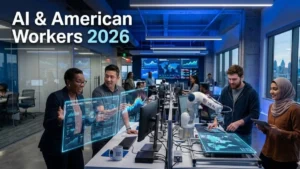
At Snowflake, a major American cloud data company, engineers who once spent hours on routine monitoring tasks now delegate that groundwork entirely to AI agents. One senior manager recently revealed he spends 20 to 30 hours a week working directly alongside five different AI agents — each specialized for a different function. This is no longer Silicon Valley experimentation. It is standard operating procedure.
Major Layoffs — With AI Cited as the Reason
The numbers are hard to ignore. This past January saw more U.S. layoffs than any January since 2009. Amazon announced plans to eliminate roughly 14,000 positions, with executives pointing directly to AI’s ability to run the company with fewer management layers. UPS, Target, General Motors, Pinterest, and HP all followed with their own cuts — each citing AI-driven efficiency improvements as a central factor.
Goldman Sachs has estimated that 6 to 7 percent of all U.S. workers face a real risk of job displacement due to AI adoption. The workers at highest risk? Computer programmers, accountants, auditors, legal assistants, and customer service representatives — white-collar roles once considered immune to automation.
New Jobs Are Also Being Created
The story is not only about job losses. Morgan Stanley analysts predict entirely new categories of work are emerging that did not exist five years ago. In healthcare, ‘computational geneticists’ and AI diagnostic oversight specialists are in high demand. In retail and consumer goods, ‘AI personalization strategists’ are being hired to blend data science with customer experience. In energy, ‘smart grid analysts’ and predictive maintenance engineers are filling newly created roles.
Gartner researchers also predict that generative AI will spawn entirely new job families in software engineering and operations — roles that will require a mix of human creativity and technical AI fluency.
Expert Reactions: What the Analysts Are Saying
“We’re seeing significant capital flow into AI, and the rapid adoption of these technologies is reshaping the workplace. Our research shows that enterprises could unlock $4.5 trillion in labor productivity. But turning that investment into real results requires more than technology — it demands human learning and development alongside it.” — Ravi Kumar S, CEO of Cognizant
Not all experts share equal optimism. Nobel-winning economists Daron Acemoglu and Simon Johnson, in a joint paper published this month, warned that AI systems designed purely for automation risk commodifying human expertise — making specialized knowledge obsolete rather than amplifying it. They argued that the technology must be deliberately designed to work with workers, not simply replace them.
Stefano Puntoni, a behavioral scientist at the Wharton School at the University of Pennsylvania, adds a psychological dimension. His research shows that even when AI systems work well, they can fail if workers do not trust them. Employees who feel threatened by AI may unconsciously resist the technology — undermining the very productivity gains companies are banking on.
Gartner’s own research strikes a sobering note: only one in 50 AI investments currently delivers transformational value, and only one in five delivers any measurable return on investment at all. The technology is powerful — but implementation remains genuinely hard.
Impact on Americans: Who Is Winning and Who Is Struggling
The impact is deeply uneven across the American workforce. Workers who have invested in AI skills are pulling ahead dramatically. According to PwC’s 2026 Global AI Jobs Barometer, employees with advanced AI proficiency earn 56% more than peers in identical roles who lack those skills. Productivity growth has nearly quadrupled in industries most exposed to AI since 2022.
But for workers without those skills — particularly those in entry-level corporate roles — the picture is more difficult. AI is absorbing the very jobs that historically served as the first rung on the ladder to middle-class stability. Recent college graduates are finding it increasingly hard to break into finance, media, and technology in 2026. The traditional entry-level job market has thinned significantly.
A coalition of U.S. labor organizations released a joint statement last week calling for immediate national investment in retraining programs and strict guidelines on how corporations deploy AI in the workplace. ‘We cannot allow a transition of this magnitude to occur without a safety net,’ the statement read.
Meanwhile, American workers are spending billions of their own dollars on AI-related education — bootcamps, certifications, and courses in AI management, data analysis, and prompt engineering are booming across the country.
Future Outlook: What Comes Next for American Workers
The trajectory is clear: AI adoption in the American workplace is not slowing down. Tech giants are pouring money into it at an unprecedented scale. Analysts have revised their 2026 capital expenditure estimates for major tech companies to a staggering $667 billion — a 62% jump compared to 2025. This money is building the infrastructure that will power the next generation of AI tools across every industry.
Gartner predicts that by the end of 2026, 20% of American organizations will have used AI to flatten their corporate structures — eliminating more than half of current middle management positions in the process. Remaining managers will need to pivot from administrative oversight to strategic leadership.
The IMF has weighed in as well, noting that in advanced economies like the United States, one in every ten job postings now requires at least one skill that did not exist five years ago. Professional, technical, and managerial roles are seeing the most demand for new capabilities — especially in information technology.
The good news, according to multiple analysts, is that AI is creating more opportunities than many had feared. Job numbers are actually rising even in highly automatable roles — but the workers who thrive will be those who combine technical AI fluency with the human qualities machines cannot replicate: creative thinking, emotional intelligence, resilience, and leadership.
Conclusion
How AI is transforming the American workplace in 2026 is one of the defining stories of our time. The technology is powerful, the pace of change is faster than anyone predicted, and the stakes — for workers, families, and the broader U.S. economy — could not be higher.
The workers who will come out ahead are not necessarily the ones with the most experience or the most prestigious degrees. They are the ones willing to adapt, learn, and meet this transformation with curiosity rather than fear. AI cannot replace human creativity, judgment, and purpose. But workers who know how to work alongside AI will have a decisive advantage over those who do not.
The American workforce has navigated industrial revolutions before. This one moves faster. But the destination — a more productive, more dynamic economy with new kinds of meaningful work — remains within reach for those willing to step forward.
FAQ Section
Q1: How is AI transforming the American workplace in 2026?
AI is automating routine tasks across industries, eliminating some jobs while creating entirely new categories of work. Companies are deploying AI agents that can handle scheduling, reporting, coding, document review, and customer service — freeing human workers to focus on creative, strategic, and leadership tasks.
Q2: Which American jobs are most at risk from AI in 2026?
Goldman Sachs estimates 6 to 7 percent of U.S. workers face real displacement risk. The highest-risk roles include computer programmers, accountants, auditors, legal and administrative assistants, and customer service representatives — all areas where AI can now handle complex cognitive tasks reliably.
Q3: Are new jobs being created to replace those lost to AI?
Yes. New roles like AI personalization strategists, computational geneticists, smart grid analysts, and AI diagnostic oversight specialists are emerging across healthcare, finance, energy, and consumer industries. Workers who upskill in AI will find growing demand for their expertise.
Q4: How can American workers prepare for the AI-driven economy?
Workers who invest in AI-related skills — including AI management, data analysis, prompt engineering, and human-AI collaboration — earn significantly more than peers without those skills. Online certifications, bootcamps, and university programs focused on AI are seeing record enrollment in 2026.

Economy

Breaking: How Inflation Is Affecting Small Businesses in the United States – What It Means for Americans in 2026
Introduction
Across the United States, small business owners are feeling the pressure of rising prices. From local coffee shops to family-owned retail stores, inflation continues to shape the daily realities of running a business in 2026.
How inflation is affecting small businesses in the United States has become a major economic concern. While inflation has cooled slightly compared with the highs seen earlier in the decade, the cost of goods, wages, and rent remains significantly higher than before.
For millions of entrepreneurs who form the backbone of the American economy, these rising costs are forcing tough decisions about hiring, pricing, and long-term growth
Background: Why Inflation Still Matters in 2026
Inflation surged in the United States following global supply chain disruptions, pandemic recovery spending, and strong consumer demand. Although government policies and Federal Reserve actions have helped stabilize inflation rates, prices for many everyday expenses remain elevated.
For small businesses, inflation affects nearly every part of operations.
Many business owners report increased costs in areas such as:
- Rent and commercial property leases
- Energy and utility bills
- Raw materials and inventory
- Employee wages and benefits
- Transportation and logistics
Unlike large corporations with deeper financial reserves, small businesses often operate on tight margins. Even modest price increases from suppliers can have a major impact on profitability.
How Inflation Is Affecting Small Businesses in the United States
Rising Operating Costs Are Squeezing Profit Margins
One of the clearest ways how inflation is affecting small businesses in the United States is through higher operating costs.
Small business owners across the country report that nearly every expense—from supplies to utilities—has increased in recent years.
Restaurants, for example, are paying significantly more for ingredients like meat, dairy, and produce. Retailers are dealing with higher wholesale prices for clothing, electronics, and household goods.
As a result, many businesses are seeing their profit margins shrink even while sales remain steady.
Some entrepreneurs say they are absorbing part of these costs themselves to avoid losing customers.
Higher Labor Costs and Staffing Challenges
Another key factor affecting small businesses is the cost of labor.
In a competitive job market, many companies have raised wages in order to attract and retain workers. While higher pay benefits employees, it also adds financial pressure for small employers.
Many small business owners say they are facing:
- Increased payroll expenses
- Difficulty finding skilled workers
- Reduced operating hours due to staffing shortages
Some businesses are also investing in automation or digital tools to offset labor costs.
Consumer Spending Is Becoming More Cautious
Inflation doesn’t only affect businesses—it also affects their customers.
As Americans face higher grocery bills, rent payments, and energy costs, many are becoming more selective about where they spend their money.
For small businesses, this shift means:
- Slower retail sales
- Reduced discretionary spending
- Greater price sensitivity among customers
Many businesses are trying to strike a careful balance between raising prices and keeping products affordable.
Key Developments in the U.S. Economy
Several trends in 2026 are shaping how inflation affects small businesses.
Interest Rates Remain Relatively High
Higher interest rates have made borrowing more expensive. For small business owners who rely on loans for expansion, equipment purchases, or inventory, financing has become more costly.
Supply Chains Are Improving
Supply chain disruptions that plagued businesses earlier in the decade have gradually improved. However, some industries still face higher transportation and shipping costs.
Technology Adoption Is Increasing
Many small businesses are turning to technology to improve efficiency. Online sales platforms, digital inventory systems, and automated payment tools are helping businesses reduce operational costs.
Expert Reactions
Economists say inflation is creating a complex environment for small businesses.
Some experts believe prolonged cost pressures could lead to more consolidation within certain industries, with larger companies acquiring struggling smaller competitors.
Others point out that American small businesses have historically shown remarkable resilience.
Entrepreneurs are adapting in creative ways—renegotiating supplier contracts, introducing new products, and finding ways to cut unnecessary expenses.
According to economic analysts, flexibility and innovation remain key strengths of the small business sector.
Impact on Americans
Local Economies Depend on Small Businesses
Small businesses play a critical role in the U.S. economy. They employ millions of Americans and help drive economic activity in cities and towns across the country.
When inflation pressures these businesses, the effects can ripple through communities.
Potential impacts include:
- Reduced hiring
- Slower local economic growth
- Higher prices for goods and services
- Occasional store closures
Despite these challenges, many communities continue to support local businesses as an essential part of neighborhood culture.
Consumers Are Feeling the Effects Too
For American households, inflation shows up in everyday spending.
Customers may notice:
- Higher menu prices at restaurants
- Increased costs for local services
- Price adjustments at small retail stores
Many consumers understand that these price increases reflect broader economic pressures rather than business decisions alone.
Future Outlook
Looking ahead, economists believe the impact of inflation on small businesses will depend on several factors.
If inflation continues to moderate and interest rates decline, businesses could see relief in borrowing costs and operating expenses.
However, some challenges may persist, especially in industries heavily dependent on labor or imported goods.
Still, there is optimism.
Small businesses have always been a powerful force in the American economy, known for their adaptability and innovation. Many owners are already finding new strategies to manage rising costs while continuing to serve their communities.
Conclusion
The conversation around how inflation is affecting small businesses in the United States remains central to the nation’s economic outlook in 2026.
While inflation may not be as dramatic as it was a few years ago, its impact continues to shape how entrepreneurs operate their businesses. Rising costs, cautious consumers, and higher borrowing expenses are forcing many owners to rethink their strategies.
Yet despite the challenges, small businesses remain a cornerstone of the American economy. Their ability to adapt, innovate, and connect with local communities ensures they will continue to play a vital role in the country’s economic future.
FAQs
Why are small businesses more affected by inflation?
Small businesses typically operate with smaller profit margins and limited financial reserves, making it harder to absorb rising costs.
Are small businesses raising prices because of inflation?
Yes, many small businesses are gradually increasing prices to offset higher costs for materials, labor, and rent.
Is inflation expected to decline in the United States?
Economists expect inflation to gradually stabilize, but some sectors may continue experiencing higher costs.
How can small businesses manage inflation?
Businesses are managing inflation by improving efficiency, adopting technology, adjusting prices, and renegotiating supplier contracts